Getting Started: Learning the Market and Selecting Stocks
If you were going to spend several thousand dollars on a refrigerator or television, you would thoroughly research the market for those goods to find the product which best suited your needs. Investing is no different. Before buying into a company, you should be well-acquainted enough with it to give a short presentation. Knowing the basics of how a company operates, what it sells, how it makes money, how much money it makes, and what kind of growth the company is expected to experience are all crucial questions that any investor should be able to answer. Developing a better understanding of the stock market is a long, but hopefully rewarding, process. Immediately investing in stocks with real money, however, is equivalent to taking a test without being introduced to the material. Formerly called “paper trading”, beginning investors would normally spend several months tracking their stock picks without having real money on them. Thanks to technology, you can now find sites that automate (for free) the process of tracking price changes for you on the internet. Simulated investing is a risk-free way of beginning to understand market fluctuations and the forces driving them. Examining these trends will payoff in the future, as an increased understanding of the stock market can only help you on your path to building wealth. Once you become comfortable picking your own stocks, you can still continue to “paper trade” online, as it offers the opportunity to explore and experiment with other investing styles. Gordon Gekko, the famed villain in Wall Street played by Michael Douglas, said “Information is the most valuable commodity I know of”. Ignoring for a moment that the movie ended with indictments for insider trading, the statement is true: you will not regret being an informed and intelligent investor. The market is constantly changing, but by learning the ropes of investing you too can pull off a “One Up on Wall Street”.
Especialy thanks from einvesting.com Don't start investing alone. Check out einvesting.com today!
Monday, October 09, 2006

Thursday, October 05, 2006
GARP
GARP
GARP, or Growth At Reasonable Price. As the name implies, the focus is finding growing companies trading at reasonable prices. Quick measures of this include the PEG ratio (Price to Earnings to Growth) and Forward P/E. Although not a specific style, GARP is utilized by many investors because of its flexibility. The average, diversified portfolio will have many GARP-type stocks in it.
GARP, or Growth At Reasonable Price. As the name implies, the focus is finding growing companies trading at reasonable prices. Quick measures of this include the PEG ratio (Price to Earnings to Growth) and Forward P/E. Although not a specific style, GARP is utilized by many investors because of its flexibility. The average, diversified portfolio will have many GARP-type stocks in it.
Wednesday, October 04, 2006
What is my risk tolerance and investing style
What is my risk tolerance? What is my investing style?
This question leads us to selecting individual investments. Consider your investment timetable for when you’ll need the money, recognizing that more conservative selections should be made the shorter the window. Everyone’s risk tolerance is different; while one person may feel comfortable with small-cap biotechs another may need a blue chip to feel equally sound.
Analyzing the risk to reward ratio here is a good first step. The more risk you take on, the more you should expect to get in return if your investment pays off. The inverse is also true: the more stable an investment, the less return one should expect. Government-backed I Bonds pay over 6%, but involve tying up money for years in order to fully benefit from them. While this gives you one target, the average return of the broader market indices is about 11% per year. There are two primary schools of thought about investing: growth and value.
Growth
Growth investing is a higher-risk strategy which focuses on finding smaller companies poised to rapidly grow earnings. Stocks here tend to be micro-caps or small-caps, and the occasional mid-cap (under $10 billion). In their younger lives, many of the well-established companies of today found themselves considered here (Think of Apple Computers (AAPL) or Starbucks (SBUX)). Growth companies can be found in many different sectors, although such companies often have similar traits. A growth company usually has a unique product or service to offer which can fundamentally change how business is done. When found early enough in their growth cycles, these companies have the potential to return enormous profits to investors.
Value
Value plays usually are found in larger companies, although the strategies used to find them can be applied to smaller corporations as well. Looking for value stocks is similar to looking for values in a store: find a good product at a price below what you would normally expect to pay. These bargains are often found in the form of companies which have been unfairly beaten down through overselling. Finding value stocks usually involves using a discounted cash flow model (DCF) to find a company’s intrinsic value. This is the form of investing advocated by Benjamin Graham, and popularized by Warren Buffett.
Questions to ask before investing
Questions to ask before investing
How much do I initially have to invest? How much can I afford to consistently add later?
Einstein described compounding as “The Eighth Wonder of the World” and for good reason. Being able to earn interest on your interest allows investments to increase exponentially faster than with simple interest. A one-time investment of $5000 earning 10% interest compounds to a total of over $54,000 after 25 years. Using simple interest, it would take over 95 years to reach the same amount. Naturally, the larger your initial investment and the more you can afford to add later on, the more you can expect to gain in returns.
Am I carrying any high-interest debt, such as on a credit card?
Before saving for future events, you should consider your present finances. Paying off any high-interest loans function as an “automatic” return. Writing a check to Visa to pay down your debt may not feel as satisfying as starting a nest egg, but by eliminating those 22% interest payments, you have effectively “made” a 22% return. Although you need not completely eliminate your debts, getting such payments into a reasonable area should be a more pressing priority.
This fiscal reckoning is also a good time to examine budgeting and expenditures. Look for unneeded or overpriced purchases, and consider the feasibility of paring them down and saving the extra money. Unused gym memberships, that $5 whipped mocha-hazelnut cappuccino, and extra cable channels all add up. The true cost of these and all other purchases involves understanding the “time value of money”, but for now it should suffice to say that $5 added to the previously mentioned investment account compounding 10% for 25 years turns into $54.17.
Technical vs. Fundamental Analysis
Technical vs. Fundamental Analysis
By Thomas Stone of statisticaltrading.com
The debate rages on. Which is better, technical analysis or fundamental analysis?
The question seems simple but it is deceptive. Underneath the question is an unspoken assumption about time horizons. Is the questioner an investor or a trader?
An investor is becoming part of something. The investor makes his choices based on a belief in the future. He desires to help make something successful. If he believes that apples will be in great demand next year he may invest in an orchard to grow apples for sale next year. During the year, while his apples are growing, he may ignore the day-to-day price changes of apples because his focus is on next year.
The trader doesn’t care to be part of anything other than the enterprise of making money. If he thinks orchards will increase in price next week, he’ll buy an orchard. He doesn’t care about orchards or apples. He’d buy a worm farm today if he thought he could turn a dime on it next week. He is very concerned about day-to-day price fluctuations since it is the past behavior of prices that make him expect the price to go up next week.
If the belief in the future value of apples is shaken then some of the orchard investors may decide that running an orchard isn’t the best choice. They abandon the business. Other investors see the cost of orchards dropping and, at some price point, believe that the now lower cost of orchards justifies the apple business given the reduced future price of apples. They start buying orchards.
This doesn’t happen all at once. Not everyone agrees with the amount that the price of apples will drop by. Because of this, different people see different price points as being good times to get back into the apple business.
The investor uses fundamental analysis to make his decisions, but what is the trader doing?
The trader is watching the patterns in the price of orchards and how frequently orchards are changing ownership as the prices go up or down. Eventually the pattern looks like a pattern that he has seen many times before and it usually occurs when prices have finished dropping and they are about to start escalating. Based on this, he decides to buy an orchard. He will hold that orchard until he thinks that he sees a pattern that suggests that the price of orchards will stop going up. He then sells the orchard. He has used technical analysis.
The trader’s technical analysis would be worthless without investors doing their fundamental analysis. Without the investors, there would be no patterns to watch for. It is the investors making their decisions based on fundamental analysis that creates the pricing patterns that the technical trader watches. The pricing pattern that indicates a bottoming in prices occurs when the price falls far enough to start attracting a large number of investors.
In the end, neither is better. Both technical and fundamental analysis help to create an efficient marketplace that can deliver goods to the consumer.
I refer to users of technical analysis as traders and users of fundamental analysis as investors. Their time horizons usually differ. Traders look to get in and out of a trade in hours, days, weeks, and sometimes months. Investors usually get in for months to years.
If you have a strong belief that something is going to happen and you are in the minority then you have an excellent opportunity to make a lot of money by investing in companies that stand to profit from that eventuality. Those profits won’t materialize until you are no longer in the minority. As more and more people start to share your belief, the prices of those companies will rise and you can profit handsomely. While you are waiting for others to start sharing your beliefs, the prices of those companies may go up and down. As long as your belief isn’t swayed you may bear those price swings secure in the knowledge of what is to come. You are an investor. On the other hand, if you’re wrong…
An example may be a belief that there will be water shortages resulting from global warming. Believing this, you may decide to invest part of your money in companies that build desalinization plants. You believe that, over the next 10-15 years, these companies’ products will see soaring demand. Secure in the belief that this will occur, you will not be terribly concerned if the price of one of those companies drops 5 percent next month. You believe that it will recover and then some. You are basing your decision on fundamental analysis.
The above is fundamental analysis on a macro economic scale. Bringing fundamental analysis to bear on a company-by-company basis is much more difficult. Numerous data points need to be entered, many of which are not available as hard data but rely on assumptions made by the person performing the fundamental analysis. One type of fundamental analysis called Discounted Cash Flow (DCF) is currently very popular. It involves formulas that take operating profit, depreciation, amortization, goodwill, capital expenditures, cash taxes, changes in working capital, and weighted average cost of capital, to arrive at a valuation for a company (see http://www.investopedia.com/articles/03/011403.asp for more detail).
Just collecting the data needed to perform the analysis for a single company can be a daunting task. Performing this kind of analysis on a large number of companies on a regular basis quickly becomes a full time job.
The trader on the other hand can use computers to scan for likely candidates for the pricing patterns that he uses. Within minutes a computer can download data on thousands of stocks and have the computer bring up relatively short lists of stocks that are potential candidates for trades.
A trader may also use technical analysis on the market as a whole to move money back and forth between an index fund and a money market fund. One simple way to do this is by using the market breadth.
Market breadth is simply a measure of the difference between the number of advancing issues and the number of declining issues on an exchange such as the NYSE. If 1200 stocks go up in price and 500 go down in price then the breadth is +700. We can calculate this number every day and then look for trends by calculating moving averages of these numbers. A good way to get long term directional movements is to analysis how two different moving averages changes relative to each other. The name for that practice is called Moving Average Convergence Divergence or MACD. If we apply MACD to the breadth using a 19-day and a 39-day moving average then we get a well-known indicator called the McClellan Summation Index (MSI).
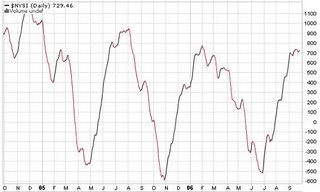
Figure 1: MSI courtesy of StockCharts.com
If we look at the SP-500 for the same time frame
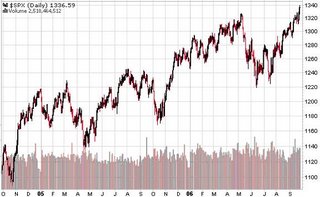
Figure 2: SP-500 courtesy of Stockcharts.com
If you had bought and sold an index fund based on the MSI peaks and valleys then you would have made the following trades (numbers and dates approximated)
Purchase date Cost Sales Date Price Profit/(Loss)
Late April ‘05 $1140 Late July ‘05 $1240 8.5%
Late Oct ‘05 $1180 Late Jan ‘06 $1280 8.5%
Late June ‘06 $1240 Late Sept ‘06 $1335 7.5%
You would have been in the market for 9 out of the last 17 months. While in the market you would have realized a 24.5% return plus the money market interest earned during the other 8 months, lets say 2.5%. That works out to a 19% annualized return (27*(12/17)).
How do you know when the MSI is at a peak or a valley? I use the MACD of the MSI with the averages being 30-day and 50-day. This smoothes out the action of the MSI and clearly shows the overall direction that it is moving in.
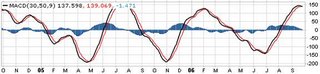
Figure 3: MACD of MSI courtesy of Stockcharts.com
The black line on the graph is a 9-day moving average of the red line. The red line is the MACD. The histogram shows the difference between the red and black line. The buy signal is when the MSI falls below –300 and the black line crosses up over the red line as it did in late Apr ’05, early Nov ’05, and late June ’06. The sell signal is when the MSI rises above +500 and the black line falls under the red line as it did in late July ’05, early Feb ’06, and late Sept ’06.
This indicator is not perfect at picking tops and bottoms. It is good at warning when the breadth of the market is no longer supportive of the direction of the market. The market usually changes direction shortly after that occurs. In the spring of ’06, this indicator was falling while the market indexes were advancing for an unusually long time. This meant that the number of stocks participating in the market move was dropping off. Fewer and fewer stocks were trading above their 40-day moving averages each week even as the SP-500 moved upward.
There are numerous technical indicators in use and there are many good books that discuss these indicators in depth. One such book is “New Trading Systems and Methods” by Perry J Kaufman. There are also computer programs that can be purchased that have many of these indictors built in such as TC2005 from Worden Bros (www.worden.com). There are also websites that have many of these indicators built in and some on-line brokers have charting packages containing some of the indicators.
The extreme in technical analysis is called Mechanical Trading. In mechanical trading a computer has extensively tested a set of indicators over numerous sets of historical data to arrive at an “ideal” set of indicators which the computer uses to issue buy and sell recommendations completely without any human intervention. My website, www.statisticaltrading.com, allows people to subscribe to computer generated buy and sell recommendations. Our computers have honed sets of technical indicators that have over 83% success rates with average holding times of 5-6 weeks. All recommendations come in the evening for execution at the next morning’s open; there is no day trading support on the site. We also offer a market timing service and a dividend investing service.
By Thomas Stone of statisticaltrading.com
The debate rages on. Which is better, technical analysis or fundamental analysis?
The question seems simple but it is deceptive. Underneath the question is an unspoken assumption about time horizons. Is the questioner an investor or a trader?
An investor is becoming part of something. The investor makes his choices based on a belief in the future. He desires to help make something successful. If he believes that apples will be in great demand next year he may invest in an orchard to grow apples for sale next year. During the year, while his apples are growing, he may ignore the day-to-day price changes of apples because his focus is on next year.
The trader doesn’t care to be part of anything other than the enterprise of making money. If he thinks orchards will increase in price next week, he’ll buy an orchard. He doesn’t care about orchards or apples. He’d buy a worm farm today if he thought he could turn a dime on it next week. He is very concerned about day-to-day price fluctuations since it is the past behavior of prices that make him expect the price to go up next week.
If the belief in the future value of apples is shaken then some of the orchard investors may decide that running an orchard isn’t the best choice. They abandon the business. Other investors see the cost of orchards dropping and, at some price point, believe that the now lower cost of orchards justifies the apple business given the reduced future price of apples. They start buying orchards.
This doesn’t happen all at once. Not everyone agrees with the amount that the price of apples will drop by. Because of this, different people see different price points as being good times to get back into the apple business.
The investor uses fundamental analysis to make his decisions, but what is the trader doing?
The trader is watching the patterns in the price of orchards and how frequently orchards are changing ownership as the prices go up or down. Eventually the pattern looks like a pattern that he has seen many times before and it usually occurs when prices have finished dropping and they are about to start escalating. Based on this, he decides to buy an orchard. He will hold that orchard until he thinks that he sees a pattern that suggests that the price of orchards will stop going up. He then sells the orchard. He has used technical analysis.
The trader’s technical analysis would be worthless without investors doing their fundamental analysis. Without the investors, there would be no patterns to watch for. It is the investors making their decisions based on fundamental analysis that creates the pricing patterns that the technical trader watches. The pricing pattern that indicates a bottoming in prices occurs when the price falls far enough to start attracting a large number of investors.
In the end, neither is better. Both technical and fundamental analysis help to create an efficient marketplace that can deliver goods to the consumer.
I refer to users of technical analysis as traders and users of fundamental analysis as investors. Their time horizons usually differ. Traders look to get in and out of a trade in hours, days, weeks, and sometimes months. Investors usually get in for months to years.
If you have a strong belief that something is going to happen and you are in the minority then you have an excellent opportunity to make a lot of money by investing in companies that stand to profit from that eventuality. Those profits won’t materialize until you are no longer in the minority. As more and more people start to share your belief, the prices of those companies will rise and you can profit handsomely. While you are waiting for others to start sharing your beliefs, the prices of those companies may go up and down. As long as your belief isn’t swayed you may bear those price swings secure in the knowledge of what is to come. You are an investor. On the other hand, if you’re wrong…
An example may be a belief that there will be water shortages resulting from global warming. Believing this, you may decide to invest part of your money in companies that build desalinization plants. You believe that, over the next 10-15 years, these companies’ products will see soaring demand. Secure in the belief that this will occur, you will not be terribly concerned if the price of one of those companies drops 5 percent next month. You believe that it will recover and then some. You are basing your decision on fundamental analysis.
The above is fundamental analysis on a macro economic scale. Bringing fundamental analysis to bear on a company-by-company basis is much more difficult. Numerous data points need to be entered, many of which are not available as hard data but rely on assumptions made by the person performing the fundamental analysis. One type of fundamental analysis called Discounted Cash Flow (DCF) is currently very popular. It involves formulas that take operating profit, depreciation, amortization, goodwill, capital expenditures, cash taxes, changes in working capital, and weighted average cost of capital, to arrive at a valuation for a company (see http://www.investopedia.com/articles/03/011403.asp for more detail).
Just collecting the data needed to perform the analysis for a single company can be a daunting task. Performing this kind of analysis on a large number of companies on a regular basis quickly becomes a full time job.
The trader on the other hand can use computers to scan for likely candidates for the pricing patterns that he uses. Within minutes a computer can download data on thousands of stocks and have the computer bring up relatively short lists of stocks that are potential candidates for trades.
A trader may also use technical analysis on the market as a whole to move money back and forth between an index fund and a money market fund. One simple way to do this is by using the market breadth.
Market breadth is simply a measure of the difference between the number of advancing issues and the number of declining issues on an exchange such as the NYSE. If 1200 stocks go up in price and 500 go down in price then the breadth is +700. We can calculate this number every day and then look for trends by calculating moving averages of these numbers. A good way to get long term directional movements is to analysis how two different moving averages changes relative to each other. The name for that practice is called Moving Average Convergence Divergence or MACD. If we apply MACD to the breadth using a 19-day and a 39-day moving average then we get a well-known indicator called the McClellan Summation Index (MSI).

Figure 1: MSI courtesy of StockCharts.com
If we look at the SP-500 for the same time frame
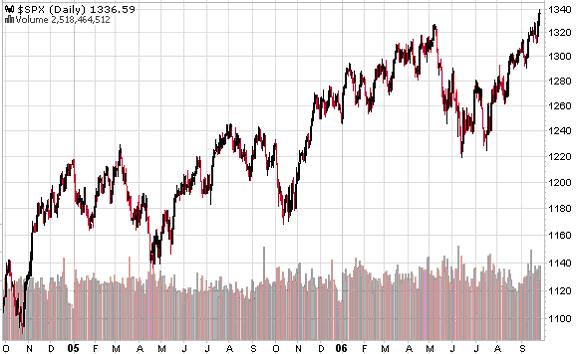
Figure 2: SP-500 courtesy of Stockcharts.com
If you had bought and sold an index fund based on the MSI peaks and valleys then you would have made the following trades (numbers and dates approximated)
Purchase date Cost Sales Date Price Profit/(Loss)
Late April ‘05 $1140 Late July ‘05 $1240 8.5%
Late Oct ‘05 $1180 Late Jan ‘06 $1280 8.5%
Late June ‘06 $1240 Late Sept ‘06 $1335 7.5%
You would have been in the market for 9 out of the last 17 months. While in the market you would have realized a 24.5% return plus the money market interest earned during the other 8 months, lets say 2.5%. That works out to a 19% annualized return (27*(12/17)).
How do you know when the MSI is at a peak or a valley? I use the MACD of the MSI with the averages being 30-day and 50-day. This smoothes out the action of the MSI and clearly shows the overall direction that it is moving in.
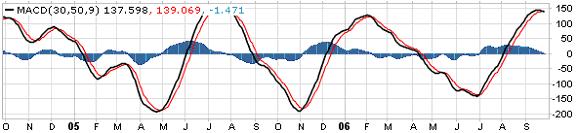
Figure 3: MACD of MSI courtesy of Stockcharts.com
The black line on the graph is a 9-day moving average of the red line. The red line is the MACD. The histogram shows the difference between the red and black line. The buy signal is when the MSI falls below –300 and the black line crosses up over the red line as it did in late Apr ’05, early Nov ’05, and late June ’06. The sell signal is when the MSI rises above +500 and the black line falls under the red line as it did in late July ’05, early Feb ’06, and late Sept ’06.
This indicator is not perfect at picking tops and bottoms. It is good at warning when the breadth of the market is no longer supportive of the direction of the market. The market usually changes direction shortly after that occurs. In the spring of ’06, this indicator was falling while the market indexes were advancing for an unusually long time. This meant that the number of stocks participating in the market move was dropping off. Fewer and fewer stocks were trading above their 40-day moving averages each week even as the SP-500 moved upward.
There are numerous technical indicators in use and there are many good books that discuss these indicators in depth. One such book is “New Trading Systems and Methods” by Perry J Kaufman. There are also computer programs that can be purchased that have many of these indictors built in such as TC2005 from Worden Bros (www.worden.com). There are also websites that have many of these indicators built in and some on-line brokers have charting packages containing some of the indicators.
The extreme in technical analysis is called Mechanical Trading. In mechanical trading a computer has extensively tested a set of indicators over numerous sets of historical data to arrive at an “ideal” set of indicators which the computer uses to issue buy and sell recommendations completely without any human intervention. My website, www.statisticaltrading.com, allows people to subscribe to computer generated buy and sell recommendations. Our computers have honed sets of technical indicators that have over 83% success rates with average holding times of 5-6 weeks. All recommendations come in the evening for execution at the next morning’s open; there is no day trading support on the site. We also offer a market timing service and a dividend investing service.
Monday, October 02, 2006
Before entering the world of investing
Before entering the world of investing, it is important to honestly analyze your present situation. Doing so will allow you to effectively manage your own money in a way which maximizes returns while limiting unwanted risk. Questions to consider include:
What is my investment goal? How much time do I have to attain this goal?
Methods of saving for a down payment on a house differ greatly from saving for retirement. The reason for this lies in the factoring of time. Over short periods of
a few years, individual companies and the stock market as a whole can experience dramatic fluctuations which in no way represent longer-term trends. Because of this possibility, a smaller percentage of your portfolio should be allocated into stocks as the time for cashing in your investments draws near. Conversely, the longer the time period you have to invest, the more aggressive your portfolio should seek higher returns.
Friday, September 29, 2006
Jim Cramer Quotes, Mad Money quotes, business quotes
Jim Cramer Quotes, Mad Money quotes, business quotes
The speculative public is indulged in stocks that I have no confidence in. There's a stock that I am sure of right now, Iomega, that is the third-tier player in a very cyclical market, storage for personal computers.
The third-tier players, Iomega, IMP, historically in this era when PC sales are threatened if there's a lot of competition in storage, the third-tier players usually cease to exist in six to eight months.
The way the credit cards were made in the '80s to be a people's form of capitalism and be able to make it so that you could get a loan that you would have been denied previous, now that's the way stocks are.
Their managements are not as shrewd and Hewlett-Packard. They're not as good as a management of Intel. They haven't seen downturns like the management of Merck.
There are companies out there in our country who historically have not been able to beat the Germans and the Japanese, who now beat them routinely.
There are tons of people who are late to trends by nature and adopt a trend after it's no longer in fashion. They exist in mutual funds. They exist in clothes. They exist in cars. They exist in lifestyles.
There were speculators saying that the foreign stocks had the stock going down. They were all wrong. Those classes of assets were dangerous at the time and they became great bargains.
There's accountability in the mutual fund industry. And they've been tremendous engines of wealth for people and they're going to continue to be so.
There've been fortunes made in Merck. There have been fortunes made in Pfizer. There will be fortunes again made in Merck and Pfizer.
These will be fabulous investments and will make millions of more people rich.
They had too many country clubs, too many airplanes, whatever. And raiders came in and rationalized those and then the raiders got too greedy and the raiders blew off. Good riddance.
This issue has died down right now because the way the corporate killers were on the cover of Newsweek and everybody's been hushed about the lay-offs.
Those were the people who sold were people who had chased previously good performance in '93. Now we have seen those funds suffer massive redemptions, at times being down as much as 40-50 percent.
We are all wrong so often that it amazes me that we can have any conviction at all over the direction of things to come. But we must.
We typically hear numbers that there are 34 million households that are in stocks in some form. Well, I say that what's occurred is if you have a job in this country, you're in stocks.
Well, he's just the same guy who in other aspects of his life would be very late to a trend.
What I'm saying is that there are bargains right now, there are stocks right now that if you're shrewd enough, you will be able to buy them at the opening today and I you'll make money in a year from now.
When I speak of the term 'the stock market', I'm invariably speaking of good American companies that tended to be not that sharp in the '70s, got sharp in the '80s, and are now unbelievably good in the '90s.
You have a class of investors and you have a class of speculators. The speculators historically haven't been big enough to cause the investors to doubt the long-term vision of stock.
Jim Cramer Quotes, Mad Money quotes, business quotes
Monday, August 21, 2006
ETF trading like the pros
Sometime when investing, and especially with something such as an ETF fund which is very broad, low risk, and pretty safe investment. Sometimes thinking outside the box is a pro thing to do. Thinking of different markets or sects that you feel have strengths. Don't always fall for investing into a ETF with what seems hot right now such as the REIT's or energy. Think outside the box a little and look down the road and what will be hot from 3 to 6 months from now? Okay no one can really predict this, but you can be pretty safe with an EFT so stretch it a little bit!
Look into actual values and what is undervalued in today's market could be a steal down the road or long term. This would be a great steal to get into a EFT. This is what the pros do, they don't just wait there time at looking or analysting and identifying the true stock value and if it's a fair enough stock value to have to date.
We can not say enough about fundamental and stock analysts research and evaluation could save you not only a lot of money, but probably a lot of time in the long run. Look and research what the ETF's are trading, the history holds, and always check the growth rate.
Remember there are several companies out there for the ETF index fund. So that means competition, but competition can be healthy. So what is our point...our point is sometimes going with the other guy that is or could be offer the same ETF for a lower price then why not go for it! Sometimes the big guys can hurt you in the long run...becuase of them want to make money too. But, sometimes those big guys make money off you more then you could believe!
Always remember as well, that investing is long term. If your looking for a quick buck first you will not be getting them out of any ETF's. So research, check into a lot of different things, and pick the one that you think can make a good long term return and start trading smart like a pro!
Thursday, July 06, 2006
Global Warming and why we need more solar power and other alternative-energy stocks
Global Warming
Do you believe or buy into this one? Well, while you will honestly not be seeing and major effects immediately. Though we believe that this is happening and that it could have some long term effects with will hit home in time. Which time will only tell us.
Nature can be gruel. With global warming the world's glaciers are melting faster than ever before. This is increasing the water supply for the 40% of the worlds population that rely on glacial melt for their water supply. Then, the glaciers will be gone and with them, the water supply for over 2 billion people. But we won't have the energy required to build and run desalination (remove the excess salt and other minerals from water in order to obtain fresh water) plants to deliver potable water to that many people, because the world will not be able to increase energy production at will, it will have lacked that ability for many years.
Interested in some facts here check these interesting articles, and tell us what you think!
2005 Was The Warmest Year In A Century
Global Warming Surpassed Natural Cycles In Fueling 2005 Hurricane Season, NCAR Scientists Conclude
We had to throw this one in as well...The good, bad and ugly of world growth
This is why we need more solar power and other alternative-energy stocks seem to us to be more appealing and have a bright future just like Jim Cramer! Booyah! So check out one of past articles about solar power and other alternative-energy stocks.
Sun Kissed
Solar-power and other alternative-energy stocks suddenly appear to have a bright future. Even W. is warming up to them.
By James J. Cramer
Cramer, Jim Cramer, Cramer Mad Money!
Here is a new one for you and myself, but it's going on. We are calling it the Cramer report and that's right it's all about the Cramer report. Cramer report is very entertaining and he is drawing a great fan base or even close to a bandwagon that continue to turn into his Cramer TV Mad Money! Cramer with all his rants about business and investing during Mad Money, it's like ESPN hits the stock market so BOOYAH!
Though, Cramer, Mad Money, the street, Cramer's Blog all that is honestly is great. Cramer is a very smart man, and the fact of the matter is...Cramer is a genius! There is one thing that what we would like to talk about today. This would be what we are calling the cramer bandwagons. These are the average joe trader sitting on the couch yelling booyah right along with Cramer throughout the whole show. Some of these same people are traders that could take every little thing that Cramer says rather it's entertaining or serious they are taking it all in as stock information to the very last booyah Cramer says! But, the fact of the matter is they are not stopping there. They will then run to there computer and get on yahoo stock discussion boards, stock forums, and etc and will continue to repeat everything that Cramer stated rather it was a joke or not.
So, your probably asking yourself so what...everyone had there opinion which is fine and great and dandy! Even Cramer has his strong and funny opinions as well. Though, the fact of the matter is people on this Cramer bandwagon are taking his word and turning into gold or even better investing. Investing is not rocket science we know this, but it's not always that easy as well.
Though, here is a new Cramer bandwagon theory that seems to be sort of trend of and in of it's self. The Cramer bandwagon strategy is go buy the stock that Cramer picks, and it should be going up. Why, because Cramer has these bandwagon fans that will take everything that he has to say and will start discussing them and even buying into his stock suggestions!
Well, to conclude, keep tuning into Mad Money, reading Cramer's log, the cramer report, and etc. We know for sure we will. It's a great resource for new stock ideas, and his introductions to be loaded with great information. Though, remember to do your own homework, listen with one ear while read and research with two eyes, and then you will be the true booyah stock winner! And Remember...Picks that stick. Stocks that rock. Equities sans inequities. Money without the madness. Booyah!
Wednesday, July 05, 2006
Have you ever wondered why some say buy and other say sell?
Have you ever wondered why some say buy and other say sell? Seriously why is it that some analysts recommend some stocks but not others? Let us do some research and work for you to help completely explaing this very great investing question. The simple, quick, and easy answer is intrinsic value of a company. Now, I know what your thinking what in the world is this intrinsic value of a company. Well let us break it down to an average trader joe. Though using the intrinsic value, analysts are able to predict what the target price for a stock should be. And your asking well who cares about the target price of a stock or what it should be. Well, if your investing money into a stock you should care!
The target price for a stock is found by taking the market cap (the price of the stock multiplied by the number of outstanding shares) and the intrinsic value and putting them into the following formula: -((market cap-intrinsic value)/intrinsic) x 100. This formula gives the percentage of whether the company is overvalued or undervalued. This percentage is then taken and multiplied by the current stock price to get the target price. For example, if a company is trading at $50 a share, and is undervalued by 15% to find the target price, you would use the following formula: 50 x 1.15=57.5 or Current Stock Price times percent difference + current stock price= target price.
The target price for a stock is found by taking the market cap (the price of the stock multiplied by the number of outstanding shares) and the intrinsic value and putting them into the following formula: -((market cap-intrinsic value)/intrinsic) x 100. This formula gives the percentage of whether the company is overvalued or undervalued. This percentage is then taken and multiplied by the current stock price to get the target price. For example, if a company is trading at $50 a share, and is undervalued by 15% to find the target price, you would use the following formula: 50 x 1.15=57.5 or Current Stock Price times percent difference + current stock price= target price.
Tuesday, June 27, 2006
EMC Corporation
Why EMC is looking good though it has hit a 52-week low. EMC Corporation and its subsidiaries engage in the development and delivery of information infrastructures worldwide. It operates in four segments: EMC Information Storage Products, EMC Multiplatform Software, EMC Services, and VMware.
Looking at the trend charts, trends of the market, and trends of the EMC's industry. Along with other factors such as a very strong position in the disk storage industry. Coming with up with statistics such as EMC holding 21.8% of external disk storage systems. Plus, the diversified fact of EMC makes it pretty appealing. With EMC corp. being in development and delivery in information worldwide.
The things that are really sticking out to us, are the 0. We know usually that 0 is not a good number but in this case it is. This 0 is the long term debt that EMC has. Put that long term debt of 0 on top of generating $1.3 billion in annual free cash flow. Now do you see why we are liking this one. So this is one of the reasons why we think that EMC can be strong in the upcoming months.
Though, we will be completely honest with you do we feel that EMC is at it's complete low. It's hard to say, but we feel that it will still be dropping some. But, be looking for this EMC to be on the raise once the whole market settles and EMC might just be leading the way.
Are you ready to be called an active investor?
So here are some common signs that you aren't ready to be an active investor:
...you can't look at the basic fundamentals such as key statistics, balance sheets, income statements, and cash flow statements.
...you think that risk in the stock market can be measured by price volatility.
...you don't understand the difference between a company's intrinsic value and its stock price.
*please note this is all subjective information, and many investors will define different values of different investing ideas. This can result in many different methodologies, but the facts is better know your stuff and do your own research!
Monday, June 26, 2006
ETF and growing in focus
Just Yesterday, Rydex Investments will unveil a set of six currency ETFs, called CurrencyShares: Australian Dollar Trust (FXA), British Pound Sterling Trust (FXB), Canadian Dollar Trust (FXC), Mexican Peso Trust (FXM), Swedish Krona Trust (FXS), and Swiss Franc Trust (FXF).
Other recent ETF that have recently just opened have been. Lately, ETFs are getting more complicated. Once known as an easy, low-cost way to achieve broad diversification, ETFs are becoming increasingly focused, allowing institutional investors and other experts to gain exposure to ever-narrower sectors (see BusinessWeek.com, 05/05/06, "ETFs: Sliced, Diced and Razor-Thin"). Fund companies have rolled out 45 new ETFs so far this year, according to Boston-based Financial Research Corp.
Just in the past few weeks more have been added as well, State Street Global Advisors will launch six new ETFs. The new portfolios are: SPDR Metals and Mining (XME), SPDR Retail (XRT), SPDR Pharmaceuticals (XPH), SPDR Oil & Gas Equipment & Services (XES), SPDR Oil & Gas Exploration & Drilling (XOP) and streetTRACKS KBW Regional Banking (KRE). Each will carry an expense ratio of 0.35%. "What we're providing is pure exposure to each one of these industries," says Greg Ehret, senior managing director at State Street.
Segway close to IPO
Segway sets course for stock market
Although the electric, self-balancing Segway scooter never quite caught on with commuters the way its backers had predicted five years ago, the segway scooter gizmo has found a growing market and very popular niche which include golf courses, law-enforcement agencies (with more than 100 police departments worldwide), and even the government is using them as well.
The segway scooter niche market, and add the highly interest from Europeans struggling with gas prices much higher than in the U.S., and Europeans being more environmentaly friend has brought with them a new fresh life into the Segway.
And Segway Inc. President and Chief Executive James Norrod, hoping to parlay the growth into a payday for the original investors in the scooter, has made grooming the company for an initial public offering in the next few years a top priority. Norrod said he was brought in as CEO last year for just that purpose by Segway's principal investors, Credit Suisse Group and the venture capital firm Kleiner Perkins Caufield & Byers, best known for its early investment in Google Inc.
Gauging Segway's prospects in an IPO is difficult, since the company will not reveal its yearly revenue or whether it is profitable. Norrod will only say that "tens of thousands" of Segways have been sold around the world, and that the company's revenue has been growing by at least 50 percent over each of the last few years.
Other factors which is the same old story we are hearing with the whole high fuel prices playing a major role in the potential of big number customers, especially in Europe, and other places where gas can be twice as expensive as it is in the U.S.
The segway scooter international sales were only about 5 percent of the complete segway business about two years ago, the stats are showing that it could be as high was 40 percent by the end of this year. The international segway sales are coming mostly from law-enforcement customers and commuters struggling with high gas prices in Europe. The company also recently set up dealerships in Japan and China.
The segway company is stating that the segway ht (human transporter) gets the equivalent of about 450 miles per gallon, based on the amount of gas it would take to create the electricity needed to run it.
For police and security users, many of whom bought the device with grants from the
Homeland Security Department and other federal agencies, the fuel efficiency is only an added bonus.
The scooters, which travel as fast as 12.5 mph, also allow an officer on patrol to cover a much greater distance than on foot, and go indoors, onto elevators and other places bigger vehicles can't. Blair said the added efficiency allows a force to cut down on the number of patrol officers on each shift and recoup the Segway's cost in as quickly as a month.
In other applications, several bomb squads such as those in Ventura County, Calif., and Little Rock, Ark., are using Segways to transport officers in bombproof and hazardous-material suits that can weigh as much as 100 pounds. The Segway allows them to scoot in and out of a scene quickly, without having to waddle in on foot in the bulky suits. Segway marketing Vice President Klee Kleber said emergency workers responded to the London bombings last year on Segways, as traffic clogged the routes for larger vehicles.
The segway company is also selling its "smart motion" technology — the software and chips that allow a segway to balance on two wheels — to robotic developers at universities and in the military. The technology of the segway will also be used in a robotic toy made by WowWee Ltd., maker of the "Robosapien" toy robot, that is due out later this year.
Wednesday, June 21, 2006
Other things to be looking for!
Other things to be looking for is a the accumulation/distribution rating which looks at the companies buying (accumulation) and the companies selling (distribution) of public stock. Also, look for major indexes to post information on the day. Then you search the leaders of the major index, which are shown daily of each industry group. Be on the look out and researching the stocks that are hitting a new high.
Just a thought!
Here is an idea. It's a work smarter not harder idea. Everyone and thier brother is talking about the market and where this and that is going. Try this one for once, instead of complaining and spending our time talking about where the market is going. Why not spend some time researching, and really doing your homework in stocks that are first staying steady in this type of market, and second some potential that could be future buying stocks when you think the market has hit it's low and ready for the upward swing. It's like preparing yourself for the future WOW...what an idea!
Again, be looking for those stocks that stand steady and strong in such a market as today. Search for some of the stocks that did not loss 50% or more, this might be the steady and strong stocks for the future. Just waiting for the market and smart investors to come on board before it starts taking off again just like the market will.
Be looking for the stocks that have a nice combination of strong growth, great earnings, sales growth would be a must, and top it off with a solid fundamentals and profit margin. I easy way to truly check out the company's strong earnings would be to checking out the company's earning per share rating. This EPS is rated and measured every company from a 1 (lower/worst) to 99 (highest/best).
Monday, June 19, 2006
Debt free can be a life safer
Debt clouds the line that separates wants, desires, and needs. Needs are necessary purchases such as food, clothing, shelter, medical coverage, transportation, and others. Wants involve choices about quality of goods. Discount shopping versus specialty shopping, lobster versus chicken, or a new car versus a good used car, and so on. Desires are those things that can be purchased only after all other obligations are met and only if there are surplus funds available to purchase them. Debt allows desires to become wants and wants to become needs.
Debt encourages impulse buying and overspending. The chief financial officer of a national credit card company said that consumers spend on the average of 25 to 30 percent more when they charge than if they purchase with a check or cash and that a great majority of those extra purchases are the result of impulse buying. Unrestricted debt assumption and credit cards have allowed people to buy immediately beyond the means to repay, without sacrificing needs and necessities.
Debt stifles resourcefulness. In a society that lives by the premise of “I want, what I want, when I want it,” the need to be resourceful—mending clothing, resoling shoes, and changing oil—in order to save money is no longer relevant. It is more convenient to purchase new or to charge services simply by “putting it on plastic,” and then paying for it later, regardless of interest or finance charges.
Debt eliminates family financial planning. Rather than planning for the future and allowing for a margin of errors, overruns, and changes to dictate future financial development, debt eliminates the necessity for future planning because the course for the financial future of the family will have already been set: pay the debt that has been accumulated.
Debt teaches children that the world’s method of managing money is normal. Debt causes children to have a casual regard for using credit cards, obtaining loans and mortgages, and keeping vows to pay the bills. For this reason, we have children who have graduated from college by borrowing for education expenses and living to the limit of their credit cards. They have never considered paying cash for transportation or anything else and have begun adult life with so much debt that they have to work for years just to pay for the debt accumulated during their college years.
Why debt is so dangerous
Why debt is so dangerous
* Debt presumes on the future. When people commit themselves to payments over a period of time, they are presuming that there will be no pay reductions, no loss of job, and no unexpected expenses. That is an improbable assumption (see Proverbs 27:1).
* Debt lowers future standards of living. Money that is borrowed today must be repaid over time along with interest, which means that those things purchased with credit will cost more “tomorrow” than they did today. Therefore, the standard of living will have to be adjusted to compensate for the added expense.
* Debt focuses on façade decisions rather than real-life decisions. Debt encourages people to make decisions based on whether they can afford a monthly payment, rather than on whether they can afford the total cost (purchase price, operational expenses, and finance charges) of the item. Debt makes it too easy to say yes to low monthly payments while ignoring the real cost of items.
* Debt leaves people at the mercy of the power of compound interest. If consumers pay the minimum monthly payment on a $1,000 debt at 19.8 percent rate of interest and never charge anything else on that account, it will take eight (8) years to pay back the $1,000 and they will pay $2,023 for the privilege of charging $1,000. In some cases, items charged on nationally accepted bank credit cards can cost upwards to eight times the original purchase price of the item by the time the bill is paid off.
Thursday, June 15, 2006
Making ETFs work for you
Making ETFs work for you by investing in what you want. Take todays market for example, a lot of people are very hesitant an d don't know what to invest in. Well, this is where ETFs can really step into your portfolio, by a little extra protection since they are one diversified, two they are funds not just one individual stock, and thirdly you can really specialize in certain sectors and areas that may be volatile in individual stocks.
Here are some real ways that ETFs can be inserted into your portfolios and making them whatever you want:
Maybe your want something international, maybe try looking into iShares MSCI GERMANY (AMEX:EWG) or iShares TR FTSE INDX (NYSE:FXI)
Say you want income from Dividends, a great looking ETF for this is iShares Down Jones Select Dividend Index (DVY), and Vanguard's REIT VIPER (VNQ).
Maybe you want to protect yourself from inflation, maybe try iShares Goldman Sachs Natural Resources Index (IGE) and iShares Lehman TIPS Bond (TIP).
Along with these roles ETFs can also, play that filler in your portfolio. Let's just say you fell that you have just about everything that you wanted covered in your complete portfolio, but your have a lot of one area, but you just want to cover everything. Well, ETF could be a great play in this factor. So make the EFTs that filler for you to completely diversified to your likes. Even if you like investing in individual stocks, ETFs may be able to play a role in your portfolio. Say if you have a lot of the large cap stocks covered, why not fill that gap with a small cap ETF to fully fill that portfolio. Just one more way of making ETFs work for you!
Make ETFs win for you
Make ETFs win for your portfolio. Here is the first one we would suggest in making ETF trading work for you and your portfolio. We suggest that you would target a well researched sector of that you know through your research that is going to be a winner and why not diversify with throwing in an ETF of your portfolio.
The good things about an ETF is that your getting what you want through customized but still a good mix of a sector of your choice. Along with this, we fell that ETFs are winners for all. It does not matter if your a still working, newly retired, or just about to retire. ETFs can still work for all of those people. The great things about ETFs still is that they target and play different investing styles. Still not convinced, check it out for your self at iShares website (http://www.ishares.com) this should help you in creating that customized mix we are talking about.
The good things about an ETF is that your getting what you want through customized but still a good mix of a sector of your choice. Along with this, we fell that ETFs are winners for all. It does not matter if your a still working, newly retired, or just about to retire. ETFs can still work for all of those people. The great things about ETFs still is that they target and play different investing styles. Still not convinced, check it out for your self at iShares website (http://www.ishares.com) this should help you in creating that customized mix we are talking about.
Make ETFs work for you
One more role ETFs can play is in the tax loss area. ETFs can help you do some fast, quick, easy moves to and a little easier on the taxes. Here is one example say you feel that Ebay is a strong solid stock with great long-term potential. Say your sitting currently on a loss as of right now, but you still really like the stock. So, this is what could do to make it look more attractive on paper. So, say you sell your stock at a loss just for the tax write-off, but in return you still really want the stock of Ebay. So you think or don't want to miss out on anything from Ebay, but remember the rule of the IRS 31 days "wash sale". This is where the role and great way of playing ETFs.
Here is the plan:
You currently own a bio tech at a loss, so you sell the stock for tax purpos only, turn around or even the same day you could purchase a bio ETF with that same stock that you were or had owned, wait 31 days...sell the ETF...buy back the stock.
Here is the plan:
You currently own a bio tech at a loss, so you sell the stock for tax purpos only, turn around or even the same day you could purchase a bio ETF with that same stock that you were or had owned, wait 31 days...sell the ETF...buy back the stock.
Tuesday, June 13, 2006
Stock Options can be the safe way to play
Sometimes some of the safest plays can be stock options. That's right, this could be a safe insurance to know for sure what your getting and your bidding on whatever price you think the stock will be in the future!
We personally like some stock options currently in some for the short and others for the long term.
Check and research some of the these stock options!
Parallel Petroleum Corporation (NasdaqNM:PLLL) engages in the acquisition, development, and exploitation of oil and natural gas reserves in Texas and New Mexico. It produces and sells oil and natural gas. The July calls on 20 are looking sort of interesting with high volume sort of pushing them as well. This would be a good one to be looking at.
Nokia (NYSE:NOK - News) had plenty of put buying relative to call buying. The July 20 puts is one that is striking to us. Maybe it's worth some of your own research to look into this one.
PORTALPLAYER INC (NasdaqNM:PLAY) this is one that a lot of looking at for the 10 calls for this month. It's interesting and will be interesting to see where or what this plays out (with no pun intended)!
Carnival (NYSE:CCL - News) also had plenty of put buying relative to call buying. The stock closed at 36.41 and the July 37 1/2 puts (CCL SU) closed at 1.90 - 2.00.
Why ETFs could be the way to go
ETF's look like the smart and safe way to go in rough markets. Why, because they are like traditional index funds, but only better while giving you the same diversiftication without the large broker fees and paying those taxes. Well, let's just stay it does not take a today's market to stir up the ETF being the next smartest, coolest thing to come along since, well the index funds! Just to paint the full picture for you. Check these numbers out...ETFs have exploded from 30 different ETFs with $34 billion in assests just six years ago, where as today there are over 200 ETF to pick from and a booming more then $300 Billion assests! If that's not telling you something, wake up and hear the wall street bell because it should be telling you something. ETF can be found in just about every sector, subsector, entertainment, gold, and even forex exchange such as the euro! So maybe some of you are convinced but maybe just convinced that ETF is a new hyped investment that a lot of people are jumping on the band wagon. Well, we are not here to debate that issue. Instead we would like to start a serious of how ETFs might be able to added in your portfolio, in return making your investing strategy that much strong in the long term that is.
Sunday, June 11, 2006
More signals and charts part two
Here are some tips, suggestions, and flags to be looking for in charts. We all know that signals and charts are very important to be looking at in research for stocks that you own or looking to buy. Rather it's a long term position or short term position there are times to be checking and seeing if it's time to let go and give into cash. Here are some things to be looking for in stocks that you should be letting go.
Volume is must to be looking, charting, and watching our for high volume selling. This is a quick yellow flag that shows people are selling the stock at high volume and mostly for a reason. Make sure you watching the trend lines of it's moving average, this is a must to keep your eye on these trend lines. Remember your out to make money not lose money. So lastly, be looking at your stocks high prices in the previous weeks to months and if you see stock getting above this it might be a good signal to take your gains and let go!
Remember the most important of all is to be doing your research, follow your rules, and enjoy trading.
Signals and Charts
Signals and Charts to watching for.
Here are some tips, suggestions, and flags to be looking for in charts. We all know that signals and charts are very important to be looking at in research for stocks that you own or looking to buy. Rather it's a long term position or short term position there are times to be checking and seeing if it's time to let go and give into cash. Here are some things to be looking for in stocks that you should be letting go.
Always, always, always check out the volume of your of the stock. If the volume of the stock is low, but the stock is having new highs this is a good signal or at least a yellow flag to be looking and maybe looking to let go. Trends are to be followed, example if you have rode a stock for several months or maybe years and now it seems to be suddenly changing...well that change can be a fast downhill slide. Also, you need to be looking at the stock if it's closing at or close to the stocks low of the day, this could be a vulnerable time and a signal to sell. Lastly, if it's dropping and it's dropping fast don't keep telling yourself it's going to get better, because sooner then later it's going to get worse!
Don't and Do for a market like this!
So the market is going who knows where. Well, I am sure some know where, and others have there thoughts. But, the most important is that you should know where your money is going and do your own hard nose research. With all that said and done with the market looking the way it is the past several weeks. Here are some small stocks tips to be looking for next and hopefully saving you a lot of money in the long term outlook of the stock market.
When the market is like it has been. Here are some major do's and don'ts!
Don't:
don't be afraid to cut your losses short!
don't let your emotions play!
don't be a pig and always want more!
Do:
do set stop losses
do set sell and lose rules
do follow disciplines rules
When the market is like it has been. Here are some major do's and don'ts!
Don't:
don't be afraid to cut your losses short!
don't let your emotions play!
don't be a pig and always want more!
Do:
do set stop losses
do set sell and lose rules
do follow disciplines rules
Monday, June 05, 2006
stay away stocks!
Here are two stocks that I think I would be staying pretty far away from as of right now!
Empire Resources Inc. (ERS)
Mannatech Inc. (MTEX)
Empire Resources Inc. (ERS)
Mannatech Inc. (MTEX)
Buffalo Wild Wings (BWLD)
Buffalo Wild Wings (BWLD)
Check out this top % gainer on the NASDAQ and a while ago seen this one Buffalo Wild Wings (BWLD). This might be worth taking a little more look and research into this one. I do love the place myself!
Buffalo Wild Wings is a new hot in more ways then one restaurant, and they may be opening soon to a city near you. This is one the best restaurants that I keep seeing and popping up everywhere.
"...engages in the ownership, operation, and franchising of restaurants in the United States. The company’s restaurants serve various food items, as well as domestic and imported beers, wines, and liquor. As of December 25, 2005, it operated 122 company-owned restaurants and 248 franchised restaurants."
BWLD announced 1st quarter 2006 results. Your going to have to check out the total revenue, which increased 26.5% to $64.3 million for the quarter ended March 26, 2006, from $50.8 million in the same quarter last year. Also look at these sales growth for the quarter was 7.7% at company-owned stores and 6.7% at franchised restaurants. Net earnings grew 43% to $3.52 million from $2.45 million during the same period last year. Earnings per diluted share also grew 43% to $.40/share from $.28/share in the same quarter in 2005. These were very strong results imho.
Still not completely convinced okay. Well, check out the what morningstar.com says by taking a look at the "5-Yr Restated" financials on BWLD, we can see the steady revenue growth from $74.6 million in 2001 to $171.0 million in 2004 and $209.7 million in 2005.
Reported earnings start in 2004 with $.84/share, increasing to $1.02/share in 2005. There has been a slight increas in shares from 8 million outstanding in 2004 to 9 million in the trailing twelve months.
Free cash flow has been a bit erratic with $7 million in 2003, a negative $(2) million in 2004,and $3 milllion in 2005.
The balance sheet looks solid with $52.4 milllion in cash, enough to pay off the combined $20.2 million in current liabilities and the $16.1 million in long-term liabilities combined. Calculating the current ratio, with $8.7 million in other current assets added to the cash gives us $61.1 million in total current assets, which, when balanced against the $20.2 million in current liabilities yields a current ratio of 3.02. Recall that ratios of 1.5 or higher are considered "healthy".
Reviewing the Yahoo "Key Statistics" on Buffalo Wild Wings, we find that this is a small-cap stock with a market capitalization of only $336.86 million.
The trailing p/e is a moderate 34.61; however, the forward p/e (fye 25-Dec-07) is more reasonable 22.29. With the rapid growth estimated (5 yr expected), we have a PEG on this stock of 1.02.
Referring to the Fidelity.com eresearch website, we can see that BWLD is in the "Restaurants" industrial group. By the Price/Sales ratio, BWLD is moderately priced with McDonald's (MCD) topping this list with a ratio of 2. This is followed by BWLD at 1.5, Applebee's (APPB) at 1.3, Darden (DRI) at 1, Brinker Intl (EAT) at 0.8, and OSI Restaurant Partners (OSI) at 0.8.
Comparing profitability numbers, by comparing the return on equity (ROE) figures, we find that BWLD is actually the least profitable with a ROE of 10.4%. Leading the list is Darden (DRI) at 26.2%, Applebee's (APPB) at 21.1%, Brinker (EAT) at 18.2%, McDonald's (MCD) at 16.9% and OSI Restaurant Partners (OSI) at 11.1%.
Finishing up the Yahoo statistics, we find that there are only 8.54 million shares outstanding with only 6.88 million of them that float. Of these shares, 1.32 million are out short, representing 17.90% of the float as of 4/10/06, or 11.1 trading days of volume (the short ratio). This is significant imho and may result in a 'squeeze' of the short-sellers if the company continues to report good news.
Hansen Natural Corporation
(HANS) Hansen Natural Corporation, through its subsidiaries, engages in the development, marketing, sale, and distribution of beverages in the United States and Canada. It offers natural sodas, fruit juices, energy drinks and energy sports drinks, fruit juice smoothies sparkling lemonades and orangeades, noncarbonated ready-to-drink iced teas, seltzer waters, lemonades, juice cocktails, children's multivitamin juice drinks, and noncarbonated lightly flavored energy waters. The company also provides vitamin and mineral drink mixes in powdered form. It sells its products primarily under the brand names, including Hansen's’, ‘Blue Sky’, and ‘Junior Juice’ to retail and specialty chains, club stores, mass merchandisers, full service distributors, and health food distributors. Hansen Natural Corporation was founded in 1985 and is based in Corona, California.
Hi-Shear Technology Corp. (HSR) engages in the design and manufacture of pyrotechnic, mechanical, and electronic products for the aerospace industry primarily in the United States. Its products include cartridges, cutters, pin pullers, and separation nuts and bolts that are used in the functioning of satellites and the vehicles that launch them into space. In addition, the company designs and manufactures electronic fire systems that control and sequentially fire the pyrotechnic devices according to preprogrammed parameters. Its products are used in missiles, launch vehicles, weapon systems, fighter aircraft ejection seats, and other applications. The company’s customers primarily include military, satellite manufacturers, launch vehicle assemblers, the U.S. Government departments and agencies, and foreign space agencies. Hi-Shear Technology was founded in 1950 and is based in Torrance, California.
Basic Energy Services, Inc. (BAS) provides well site services to oil and gas drilling and producing companies in Texas, Louisiana, Oklahoma, New Mexico, and the Rocky Mountain States. It operates in four segments: Well Servicing, Fluid Services, Drilling and Completion Services, and Well Site Construction Services. The Well Servicing segment operates a fleet of 323 well servicing rigs and related equipment. It offers services, such as the installation and removal of downhole equipment, and elimination of obstructions in the well bore to facilitate the flow of oil and gas. The Fluid Services segment provides oilfield fluid supply, transportation, and storage services. It offers services, such as transportation of fluids used in drilling and workover operations; sale and transportation of fresh and brine water used in drilling and workover activities; rental of portable frac tanks and test tanks used to store fluids on well sites; and operation of nonhazardous wastewater disposal wells. This segment provides these services by utilizing a fleet of 475 fluid services trucks and related assets. The Drilling and Completion Services segment provides pressure pumping services, such as cementing, coiled tubing, and pressure testing; cased-hole wireline services; and underbalanced drilling in low pressure and fluid sensitive reservoirs. It offers these services through operating a fleet of 56 pressure pumping units, 25 air compressor packages, and 12 cased-hole wireline units. The Well Site Construction Services segment provides services for the construction and maintenance of oil and gas production infrastructure, such as preparing and maintaining access roads and well locations; installing small diameter gathering lines and pipelines; and constructing temporary foundations to support drilling rigs. It offers these services by utilizing a fleet of 200 operated power units. Basic Energy Services was founded in 1992 and is headquartered in Midland, Texas.
Glamis Gold Ltd. (GLG) engages in exploration, mine development, and the mining and extraction of precious metals in the United States, Honduras, Mexico, and Guatemala. It produces gold from El Sauzal Mine in Mexico, Marigold Mine in Nevada, San Martin Mine in Honduras. The company operates Rand Mine in California for gold; and Marlin Mine in Guatemala for gold and silver. It also holds a 100% interest in the Cerro Blanco Project in Guatemala; and a property located in Imperial County, California. As of December 31, 2005, the company’s proven and probable reserves include 102,428 thousand tones of gold and 32,257 thousand tones of silver. Glamis Gold, formerly known as Renniks Resources, Ltd., was incorporated in 1972 and is based in Reno, Nevada.
SPIL
SPIL is moving very close to it's 200 day average. Institutional holding is up, buyers outnumber sellers about 2 to 1, and history tells us this is a good stock to hide in during June... when our market gets a bit weird.
Increase in earnings for this year is targeted at 50% plus. FY 06 earnings are estimated at .75 @ share which if you do some conservative math gives you at least $7.50 @ share and it's currently $6.27...and that's using my "chicken little" math... you can apply whatever PE feels good. Institutional holders include Fidelity Management and Barclays Global. Best of all, 8.8% of the stock is insider held. That means not only their reputations, but their billfolds are on the line. My kinda' set up Smile
Increase in earnings for this year is targeted at 50% plus. FY 06 earnings are estimated at .75 @ share which if you do some conservative math gives you at least $7.50 @ share and it's currently $6.27...and that's using my "chicken little" math... you can apply whatever PE feels good. Institutional holders include Fidelity Management and Barclays Global. Best of all, 8.8% of the stock is insider held. That means not only their reputations, but their billfolds are on the line. My kinda' set up Smile
Friday, May 12, 2006
A Trader’s Self-Evaluation Checklist
A Trader’s Self-Evaluation Checklist
Brett N. Steenbarger, Ph.D.
What is the quality of your self-talk while trading? Is it angry and frustrated; negative and defeated? How much of your self-talk is market strategy focused, and how much is self-focused? Is your self-talk constructive, and would you want others to be talking with you that way while you’re trading?
What work do you do on yourself and your trading while the market is closed? Do you actively identify what you’re doing right and wrong in your trading each day—with specific steps to address both—or does your trading business lack quality control? Markets are ever changing; how are you changing with them?
How would your trading profit/loss profile change if you eliminated a few days where you lacked proper risk control? Do you have and strictly follow risk management parameters?
Does the size of your positions reflect the opportunity you see in the market, or do you fail to capitalize on opportunity or try to create opportunities when they’re not there?
Are trading losses often followed by further trading losses? Do you end up losing money in “revenge trading” just to regain money lost? Do you finish trading prematurely when you’re up money, failing to exploit a good day?
Do you cut winning trades short because, deep inside, you don’t think you’ll be able to make large profits? Do you become stubborn in positions, turning small losers into large ones?
Is trading making you happy, proud, fulfilled, and content, or does it more often leave you feeling unhappy, guilty, frustrated, and dissatisfied? Are you having fun trading even when it’s hard work?
Are you making trades because the market is giving you opportunity, or are you placing trades to fulfill needs—for excitement, self-esteem, recognition, etc.—that are not being met in the rest of your life?
Are you seeking trading success as a part-time trader? Would you be seeking success as a surgeon, professional basketball player, or musician by pursuing your work part-time?
Can you identify the specific edges you possess over the many other motivated, interested traders that fail to achieve success in the markets? Do you really have an edge, and—if so—what are you doing to maintain it?
Brett N. Steenbarger, Ph.D. is Director of Trader Development for Kingstree Trading, LLC in Chicago and Clinical Associate Professor of Psychiatry and Behavioral Sciences at SUNY Upstate Medical University in Syracuse, NY. He is also an active trader and writes occasional feature articles on market psychology for a variety of publications. The author of The Psychology of Trading (Wiley; January, 2003), Dr. Steenbarger has published over 50 peer-reviewed articles and book chapters on short-term approaches to behavioral change. His new, co-edited book The Art and Science of Brief Therapy is a core curricular text in psychiatry training programs. Many of Dr. Steenbarger’s articles and trading strategies are archived on his website, www.brettsteenbarger.com
Thursday, May 11, 2006
JSDA - Jones Soda Co.
Man oh man! Sometimes you know the feeling. I should have bought this one. I can remember doing stock screens several years ago looking that this one JSDA. I also have to admit I am a big fan of the not only the niche drinks, the designs, but I love the pictures on every bottle and can! It's just a cool, great idea, and I really sort of became a fan of Jones Soda! Not to mention that they just taste flat out the best!
But, moving on into the investing world. Let's take a close look at this one. Some are saying it's to high, others are saying it's a strong buy!
JSDA did break out of the handle with a nice long volume bar on 4/28. It then traveled sideways with some uncertainties through earnings. Today signifies AMAZING strenght in the breakout and I predict JSDA to keep a VERY VERY strong uptrend in order. If any sort of good news gets released we blow past $15 in no time. Personally I would say it's a strong buy even at 10.22... I AIN'T SCARED! But like always do your own research on this one, and let us know what what you think or decide!
Another note is that JSDA is expensive. Companies that have the potential to grow exponentially are always expensive. For every one of these stocks that end up justifying the most bullish predictions, there are 4 or 5 that completely disappoint the bulls. But, speculators will pay up for the chance at a home run. Last time I looked, JSDA didn't do any bottling for themselves; they contract it out. Likewise the frozen supermarket treats. That means there are virtually NO LIMITS to JSDA as it ramps up. They have a powerful brand and image which they are leveraging in all kinds of creative ways. They have lots of cash. No debt. And most of all the people at the top of the corporation seem to really be having a GOOD TIME!!!! That is priceless.
Will JSDA defy the odds and hit a home run? Will it be the one out of five?
So long as Jsda grows revenues 20%+ and the beverage industry is considered sexy and ripe for consolidation with examples of Snapple and Sobe among others in investors' minds and Hans going parabolic, JSDA -- with successful niches, great DTR accounts, a good balance sheet and exploitable patents, will likely remain hot.
Saturday, May 06, 2006
C - A - N - S - L - I - M
one with 10 million shares, with all other factors equal, the smaller one will usually be the bigger mover. Stocks that have a large percentage owned by top management are generally better prospects. Again referencing O'Neil's 38 year study, more than 95% of the companies had less than 25 million shares outstanding when they had their greatest period of earnings improvement and stock price performance.
Foolish stock splits can hurt a stock's performance. Watch out for companies that split their stock 2 or 3 times in just a year or two. The splitting creates a larger supply and may make a company's stock performance more lethargic, like many "big cap" companies. Large holders who thinking of selling are often inclined to sell their 100,000 share positions before a 3-for-1 split would have them looking to sell 300,000. Smart short sellers (an infinitesimal group) pick on stocks beginning to falter after enormous price runups and splits, realizing that the potential number of shares for sale (particularly by funds) has dramatically been increased.
C - A - N - S - L - I - M
L = Leader
People often buy stocks they're comfortable and familiar with, like an old pair of shoes. Usually these are draggy slow-pokes rather than leaping leaders. It is really important to look at how your stock is performing in relation to the overall market. The 500 best performing stocks from 1953 to 1990 averaged a relative price strength of 87 (scale of 1-99) just before they began their major advances in price. Avoid laggard stocks and look for genuine leaders.
C - A - N - S - L - I - M
I = Institutional Sponsorship
It takes big demand to move a stock significantly higher in price. Institutional buyers are the most powerful source. You don't need a large number of institutional owners, but should have at least a few. No institutional sponsorship in a stock is a bad sign because odds are that many institutional investors looked at the stock and passed it over. The things we are looking for with C-A-N-S-L-I-M are really signs that the bigger money (mutual funds, banks, insurance companies, pension funds, etc.) is coming into the stock. See that there is a better-than-average performance record by at least a few of the institutional owners.
Another good thing about some institutional sponsorship is that it provides buying support for the stock. Beware of stocks that become "overowned". By the time performance is so obvious that almost all institutions own it, it is probably too late. Pay attention to whether the number of institutional owners is increasing or decreasing.
C - A - N - S - L - I - M
M = Market Direction
You can be right on everything else, but if you are wrong about the direction of the broad market you are still likely to lose money. The best way to analyze the overall market is to follow and understand every day what the general averages are doing. The difficult to recognize, but meaningful changes in the behavior of the market averages at important turning points is the best indicator of the condition of the whole market.
What signs should you look for to detect a market top? On one of the days in the uptrend, the total volume for the market will increase over the preceding day's high volume, but the Dow's closing average will show stalling action, or substantially less upward movement, than on prior days.
The spread between the daily high and low of the market index will likely be a bit larger than on the earlier days. Normal market liquidation near the market peak will only occur on one or two days, which are part of the uptrend. The market comes under distribution while it is advancing! This is one of the reasons so few people know how to recognize distribution (selling).
Immediately following the first selling near the top, a vacuum exists where volume may subside and the market averages will sell off for four days or so. The second, and probably the last early chance to recognize a top reversal is when the market attempts it's first rally, which it will always do after a number of days down from it's highest point. If this first attempt to bounce back follows through on the third, fourth, or fifth rally day either on decreased volume from the day before, or if the market average recovers less than half of the initial drop from it's former peak to the low, the comeback is feeble and sputtering when it should be getting strong. Frequently the first attempt at a rally during the beginning of a downtrend will fail abruptly. Possibly after a one day resurgence, the second day will open up strong, only to sell off toward the end of the day and suddenly close down.
After an advance in stocks for a couple of years, the majority of the original price leaders will top, and you can be fairly sure the overall market is going to get into trouble. It is very important to pay attention to the way the leading stocks are acting.
C - A - N - S - L - I - M
Thursday, May 04, 2006
Did you know about your 401K?
Roth 401K accounts are going to be available as of 2006. The limits as to what you can deposit into a 401K are much higher than what you can put into an IRA; I think the limit this year was $4500 for an IRA and something like $12,500 for a 401K. The deposit limits for a Roth 401K for 2006 will be $15,000. So you would have to earn enough to max it out, but imagine putting $15,000 per year into an account that can grow tax free until retirement.
Even if you're just able to put in $10,000 a year into a 401K making just 5%, in twenty years you would have $330,660 to withdraw tax free. $200,000 of that is deposits, the remainder is earned interest, so you got $130,660 in returns tax free. That's at 5%. If you increase that to 10% the numbers jump to $572,750. And that is interest paid yearly. If you deposit $1,000 per month ($12,000 per year) and earn 10% interest compounded monthly the number grows to $759,368.84. Shocked Even at 5% compounded monthly with $1,000 monthly deposits and 5% return you would have $411,033.67 after 20 years.
A Roth IRA limited to $5,000 per year deposits in twenty years at 10% annually is worth $286,375. A Roth 401K with the larger contribution limits would be very cool. Cool
Warren Buffet has his own cartoon!
That's right Warren Buffet hasa new kids series while Buffet gets animated. This new kids' series, “The Secret Millionaire’s Club,” will feature the words, voice and likeness of Warren Buffett.
Billionaire Warren Buffett, the master mind of investments through ages and through the worldwide. He is staring in a DVD series as a cartoon version of himself, dispensing advice to children ages five to 12.
The series, will feature the words, voice and likeness animations of Buffett, who is known as the investment guru investor and runs the company Berkshire Hathaway.
Check out the full story here at msnbc
Wednesday, May 03, 2006
Mark-to-Market Election
If you are a full time trader, you can make a "Mark-to-Market"
election with the IRS, which changes your accounting method. There are
benefits and drawbacks which each individual needs to determine what's
best for them and their circumstances.
With mark-to-market, you're not limited to a $3,000 capital loss each
year, all your losses can be used. This can be helpful if you have
other sources of income it could offset. There are also expense
benefits. But all income is ordinary, and you give up the long term
15% gain benefit.
Another benefit is not having to mess with keeping track of wash
sales, however, I use software that takes care of all that, and
generates a sch. D, so it's completely painless (except for the cost
of the software that is). I just import all my trades, usually weekly,
sometimes more or less often, and I can see exactly where I stand for
the year. It generates graphs of all sorts, and detail and summary
reports to help you see what you're doing right or wrong. I don't have
a lot of expenses, or losses (knock on wood), so the mark-to-market
election isn't right for me.
Save More Taxes With a Mark-to-Market Election
As a trader, you can also make the special "mark-to-market" election.
If you do, two very important tax benefits come your way.
First, you don't have to worry about the wash sale rule, which defers
the tax loss when you buy the same stock within 30 days before or
after a loss sale. If you make lots of trades, this can happen all the
time. The disallowed wash sale loss gets added to the basis of the
shares that caused the problem. In other words, with the
mark-to-market election you won't have to spend as much time on
bookkeeping as you do researching and trading stocks.
You are also exempt from the $3,000 annual limit on net capital
losses. Why? Because as a mark-to-market trader, all your trading
gains and losses are considered "ordinary," just like garden-variety
business income and expenses. If you have a biblically awful year, you
can deduct your trading losses when you would otherwise be limited to
a mere $3,000 writeoff. The tax savings should ease your pain.
Naturally, there's a price for these goodies. On the last trading day
of the year, you as a mark-to-market trader must pretend to sell your
entire trading portfolio at market and book all the resulting gains
and losses on your return. You then pretend to buy everything back at
the same price. So your stocks start off the new year with basis equal
to market value and no unrealized gains or losses.
Also, you can't take advantage of the 15% long-term capital gains rate
for stocks in your trading portfolio. However, this really isn't a
problem because you shouldn't have anything but short-timers in your
trading stable anyway.
Tuesday, May 02, 2006
Simple as supply and demand just like economics in high school
Supply and Demand just like economics in high school
It's really not rocket sciences. Just like what you learned in High School in that basic economics class, when stocks are in demand the price usually the key word being USUALLY should be going up. The way to check the supply and demand is by simply watching the daily trading volume of the stock. The stocks raising price should be followed or coincide with volume. This which in fact should show a good buying power move for the stock. The same should go with the other end, say if the stock is less in demand or when the price falls so come the volume of the daily trading volume. It's really something to be aware of, and check in for yourself.
Key thoughts when looking at economics in high school supply and demand of a stock:
- Beware of the daily volume of the stock. We suggest that you don't even touch a stock that has less then a daily average of 500,000 volume.
- Stocks that are really moving should show a volume increase of 100% or even more in some cases.
- When a insider buying or companies buying back their stock in the open market could be a green light that this stock is a winner.
- Watch the past 50 trading days. So if a stock is trading 1,000,000 on the average, and then it starts showing a volume increase and starts trading at 1,500,000 this is a good indication this could be a green light.
One key note to really make sure and check into is. When a stock with low volume, but the stock is still going up in price, this is a yellow if not a red flag to be looking into. This means the stock is moving probably on news strictly and not really supply and demand. So the usually the winning stocks are the ones with a strong demand and then have the price increasing to follow.
Monday, May 01, 2006
The weekend in review
Mircosoft news
Well, the big news is Microsoft. That's right after falling not really off the charts so to speak, but for Microsoft. It sure did fall pretty hard and fast after it's quarter results. Some are saying it's a buy, it's low, and it's a big and yours stupid if you don't buy this one at the market. Which should be opening right around 24.20 or somewhere around there. Which is a very low price for MSFT, but others are saying wait a minute rememeber this one....Gateway Inc. (GTW)! Some are saying just be aware that believe or not even Microsoft could fall pretty low. Though, with the new Xbox or xbox 360 or whatever it's called. I don't see Microsoft falling to low, but who really knows. It's up to you and what you want to invest in!
Gold
Gold sector is still the hot. You can say it's as hot as gold or something like that! This sector is still one to be investing and has shot up like no other. Don't mark our word, but everyone elses....that's right it's still on up! Part of what's driving the prices is the strong global economy -- it's partly China and now also Japan, as well as continued growth in the U.S.
Gas prices
Gas prices are still going up as well. Though, that said, there is a one single question that everyone is still wanting answers.
If the gas prices keep going up, how is that oil companies, gas companies, and etc keep making money and going up as well!
Saturday, April 29, 2006
How rich are you?
Here is something sort of humbling that we think is worth checking out. Check out today where you are global on the wealth or rich list. Check it out now at Global Rich list
Thursday, April 27, 2006
Winning stocks - have to be taking steps toward the next level!
Things to be looking for that winning stocks. One key factor that you should and can be looking for that winning stock is how or what are they doing to step up to the new or next level. Is the companies that your looking into are they taking there products to the next level, are they having new services that is taking them to the next level. Or is there managament just being stuck, or are they growing and taking it to the next level.
This idea of companies that are growing and taking there products, services, management to the next level is something really to watch! Some have researched and stated that a lot of success in stocks have this key factor in a company that turns out to be a winning stock. Meaning that this company is taking it to the next level. With this in mind, you have to keep the price in mind as well. So if a company is trying something new and trying to take the company to the next level. This might mean, a new price level as well. Meaning that the old theory of buy low and sell high might not always be the best approach. Some might be missing out on the stock's biggest success in the new stocks price highs.
Keys to be looking for in a stock:
- Management is a key success in company!
- winning stocks will mark a new price high, but will continue to climb because of the growth and taking it to the next level. Along with the volume hitting new highs.
- Also keep your ears and eyes out of companies taking the next level. Or starting new products that could be taking the company to a the next level.
- Though the new products have to be solid and worth taking the chance on taking them to the next level.
* interesting note to keep in mind...when investing. Stocks on the new high tend to go higher, and those on the new lows often continue to go lower. Though, most if not everyone invests their money at the lows. We have to ask why!?!?
Wednesday, April 26, 2006
Current Earnings Growth
Current Earnings Growth
Well, looking for that winning stock, it's important to check out the current earnings growth. The stocks you screen to purchase, this might be the single most important factor in purchasing the right stock. Though, when looking at the current earning growth. It's important to know what your looking for such as...what to compare it to, what's the increase, and the percentage of increase in current quarterly earnings per share.
What you should be looking for:
- looking at current earning growth that is three quarters that are winning or ahead
- some of these stocks with good current earning growth could have high P/E
- do research and make sure that there is a positive history
- don't look for the homerun hit, but looking for solid current earning growth...though looking for good high percentage in earnings.
Annual Earnings Growth
Annual Earnings Growth
This is a good signal to really take note of. If the annual earning growth is strong, then that's a good signal that the stock will be good one. But, at times it's just not that simple. There are some key fundamentals to consider. Also, quarterly earnings are a hugh thing to watch out for, but some will say that a big factor in picking is to have an good positive looking annual earning growth of the last five years.
Things to really be looking for:
- EPS growth of at least 20% to 25%
- the last three years having a increase in annual earning growth
- ROE (Return On Equity) needs to be at least 15% or some might say 17% or higher
Sunday, April 23, 2006
We did our own research
Last week IBD listed ten stocks that they thought and listed under $10 to be watching for. Here was the list along with there closing price as of Friday 21st:
MED MEDIFAST INC 10.14 +3.36%
TGB TASEKO MINES LTD 3.49 +6.08%
ARTG ART TECH GROUP 3.55 -0.28%
RNWK REALNETWORKS INC 10.39 -2.35%
WEL BOOTS&COOTS/INT WELL 2.40 -0.59%
LPSN LIVEPERSON INC 7.40 -2.25%
EZM EUROZINC MINING CORP 2.16 +3.35%
GEMS GLENAYRE TECHS 5.72 +0.18%
BDCO BLUE DOLPHIN ENER 7.29 +1.96%
HOM HOME SOLUTIONS OF AM 8.91 -0.22
Our research was to see if we were to invest from the opening bell of Monday the 17th. Right after this list came out during the last weekend.
The Winners or ahead of the game would be as followed:
MED opened at 9.15 Monday morning. Got as low as 8.62 during Monday, had a extremely low volume day of 49,900 on Tuesday. But, it ends up closing on friday at 10.14, though reached as high as 10.31.
RNWK opened at 9.83 but got has low as 9.81 and ended up closing on 10.07 monday (17th). Got has high as 10.96 on Friday, but then closed at 10.39 on Friday.
HOM - 8.01 8.05 7.80 7.87 Opened at 8.01 on Monday morning, got has high was 9.12 on Friday, but then closed at 8.91 on friday.
GEMS - opend Monday morning at 5.47 the high was 5.78 closing on Friday at 5.72
BDCO opened at 7.07 got has high was 8.60 on Tuesday, but after that went down as low as 6.91 and then closing on Friday at 7.29
TGB opend on Monday at 3.01 reached as high as 3.78. Closing on Tuesday at 3.59 and wednesday closed at 3.58 then finally on Friday closed at 3.49.
WEL opend at 2.21 high for the week was 2.50...closing on Friday at 2.40
EZM opened at 2.14 went up as high as 2.42 on Tuesday, closed on Tuesday was a high for the week at 2.31. Though ended the week dropping some and finally closed on Friday at 2.16
LPSN opend at 7.75 the high being 7.84 on Tuesday, and finally dropped and closed at 7.40 on Friday. The thing that we didnot like about this stock is the volume is pretty low for our fundamental investing. The 5 day volume average is only 241,000. We personally like at least 500,000 or higher.
ARTG opening at 3.80. Reached a high for the week of 3.81 on Monday, and then got as low as 3.46 and closed at 3.55 on Friday.
So the Research shows that 8 out of the 10 were gains...not always big gainers, but it's the first week or so.
The biggest gain were + .95 MED, +0.90 HOM, + 0.56 RNWK, + 0.39 TGB, +0.25 GEMS, +0.22 BDCO, + 0.19 WEL, + 0.02 EZM,
The two loses were - 0.34 ARTG, -0.35 LPSN
We found it was interested to do our own research and see how good IBD does of picking, and what we see after a week, 8 out of 10 with two gains over 90 cents that's not bad at all!
Summer saving for kids!
It's getting closer and closer. That's right it's almost here Summer time, and I keep hearing and seeing more and more student trying to get summer jobs. And it seems to becoming more and more for even the younger ones. Here are some simple tips to teach your kids early how to be responsible for money. Here are some simple tips.
1. Teachh them from early age while shopping with them for clothes, groceries, or even big ideas like cars and etc. Talk with them about comparing prices, quality, and even bulk prices when shopping. A great time is when shopping for school supplies, holidays, birthdays, or etc.
2. Take your kids to the bank with you. Whenever you can take them to withdrawal money from the ATM, or going to the bank to do transactions, and explain to you children of what your doing and how to do it. Share with them the interest rates of your saving accounts, where has your checking account usually don't have interest rates.
3. Talk with your kids about investments. Sharing information such as purchasing stocks with different companies of interest. Example, many young kids enjoy shopping for shoes, so why not explain with them about Nike the company, and how you can personally invest in this kind of company. Some experts say early the better to start explaing this such as elementary school age, but keep repeating and teaching through middle school to help better understand these ideas.
"Too many people have suffered losses -- by not diversifying, for example -- that could have been avoided with a little information and education," says Steve Hines, spokesman for the JumpStart Coalition for Personal Financial Literacy. "But, stocks generally outperform other forms of investment over longer periods of time, and since kids have time on their side, why not help them learn to make their money grow?"
4. Create a spending account, and provide your kids with a piggy bank.
Give your children an allowance and make sure they set aside a certain amount for savings. A piggy bank can help children watch their money grow. Let them keep a financial journal to record their financial activities.
5. Make them earn their money. Hard work pays off, the easy way out is never easy money. Teach them that you as parents had to and continue to have to work hard for the money that you earn, and that old saying "money doesn't grow on trees is really true. They can start by picking up their toys, taking out the garbage and raking the leaves.
6. Think about and teach them goals. Goal-setting can helps kids achieve their dreams. So whatever the goal is toys, car, or whatever, help them and teach them that it can be attained through hard work, proper budgeting, and saving up.
7. Show and teach the correct way to use credit cards. You ask what is the correct way to use a correct card. Well, our rule of using a credit card is you don't buy it unless you can pay it of right away. So your not buy and wait to see if we have enough money to pay it off at the end of the month. It's buy now knowing you will pay it off this month. Make sure if or when you give your kids a credit card, make sure to monitor the use of the credit card.
"A troubling trend in our society is giving credit cards too early and too easily," says Duvall, who suggests giving responsible teenagers a credit card toward the latter part of high school, along with a good heart-to-heart talk about credit.
"Know your kids individually, and don't be in a rush to help them spend," says Hines. "Don't get your kids a credit card and hope they'll learn something on their own. You wouldn't get them a car and hope they'll learn to drive it on their own, would you?"
8. Include kids in discussions on household budgeting and vacation planning.
Talk about necessities such as utilities and extras. Teach kids about the financial resources needed for the vacation such as tickets, transportation, lodging and entertainment.
9. Teach them about donating or tithing through your local church. We teach the 10-20-70. Which is tithe/donate/give 10%, save 20%, and spend 70% on monthly expensives. This is a great way to teach your children about tithing at a early age.
Hines believes volunteering is a way to "offset the consumer-driven environment by teaching kids that there is joy in something other than buying things for themselves.
"For some kids, this is a powerful lesson. Instead of just delayed gratification, it's gratification by spending on someone else. With donations, there are also opportunities to discuss how far a dollar can stretch and values."
10. This is the rule that your kids follow your guidance. You as a parent have to start leading by example, by showing them the right way to save, teaching them at an early age to develop a budgeting program. Start early on investing for the future. There are all kinds of great free resource for this kind of information all over the internet.
Friday, April 21, 2006
Earnings, expired, and excitement!
Wow, this Third friday of April has beena busy day!
First to top of the earnings, no other then Google (GOOG) jumping up to a hugh gain, and of the biggest gains in about 6 months. That's right GOOG closed on Thursday evening at 415, and then opens the day after the earnings coming out. It opens at a high gain of 450! Google is still one of the top companies out to watch for and really do your homework and makes some money on this one. Just think if you would have put in $85 for this company back in August...how nice of return would that be today's 450!
Also, Ford (F) is doing a lot of moving today, but it's in the opposite direction as Google (goog). Ford states a lot of downgrades, jobloss, and so much more! Not looking real good for the Ford company!
Also, today is the expired...for all those calls, puts, and options. Which stocks did you put in for your stock options this month?
We can not forget to mention the excitement of all this crude oil information. What's going on, and where is this one going? All I can say I am glad that it's not winter, and start looking to purchase a hybrid. Interested to see what Crude Oil closes as today!
Dell is a Sell
Dell for the first time since it become a public stock back in 1996! But, now it's a sell. Everyone is saying to jump of the Dell! That's right we are seeing more and more dell sell ratings. So wait out and starting putting your options or get on the short bus on this one. Dell is a strong sell!
Wednesday, April 19, 2006
HOM...looks like it could be a winner
HOM...looks like it could be a winner. Looks like it is finally ready to break towards double digits...Could be the start of a monster run...
Home Solutions of America, Inc. offers recovery, restoration,
rebuilding/remodeling, and specialty interior services to commercial
and residential properties in the United States.
In the 4th quarter the company reported an EPS increase of 233% on a
revenue increase of 184%. Furthermore the company recently reported
contract awards worth up to $40MM to perform hurricane related building
activities. The company has a tremendous backlog of business but has
not issued earnings guidance due to uncertainty about allocation of
funding for projects in New Orleans.
Friday, April 14, 2006
This sector is interesting to look at
Corning
In March, the venerable glass and ceramics outfit said it had developed a new glass composite that doesn't include heavy metals in the manufacturing process. By reducing environmental hazards associated with the glass, commonly used on liquid crystal display televisions, the new formula enables Corning (GLW) to gain an earth-friendly edge and reduces concerns over how the glass is disposed of.
They plan to adopt the technique over the next two to three years. The new method is "clearly a differentiator for them," says C.J. Muse, an analyst at Lehman Brothers (LEH) who rates the company overweight. As attention in the glass sector turns away from size capacity to how the glass is made, Muse writes in a recent report that the new composition "support[s] the company's market share position and premium pricing over the competition."
Capstone (CPST) produces microturbines that can be used in parallel with utility power and heat or as a backup to it. Capable of running on fuels such as kerosene and natural gas, Capstone aims for its turbines to produce very clean emissions while helping clients save on the electricity bill. Capstone's turbines spin on high-pressure emissions from a fuel cell, reducing the need to use additional fuel.
Medis (MDTL) produces portable alkaline fuel cells designed to power increasingly sophisticated and power-thirsty personal gadgets. The devices, scheduled for a limited retail release in the fourth quarter, provide sustained power without the need to use up excess electricity. Though they're disposable, the fuel cells don't contain heavy metals, unlike standard alkaline batteries. Despite these advantages, CEO Robert Lifton says the device was developed primarily with practicality, not ecology, in mind. "It's a product for people that happens to be environmentally O.K.," he says.
Quantum's products include high capacity hydrogen storage tanks that can be used in fuel-cell powered cars. These tanks can store enough hydrogen to power a fuel-cell car for about 300 miles. Brion Tanous, managing director of equity research at Merriman Curhan Ford & Co. -- which makes a market for Quantum (QTWW) -- says that's about the minimum distance electric cars will need to travel before consumers will buy them, and that makes Quantum an industry leader in a field that could take off. He rates the stock a buy despite predicting that losses will continue into at least 2007.
Some really bad way to pay off your taxes
Have you ever seen or read this "The IRS does have what it takes to take what you've got." Well, though it's that time to tax crunching, paying your taxes, and its about that deadline time! I love it when people like myself wait for the last second to do there taxes! Why is that...oh well that's an whole nother story!
Let's talk about not getting to caught up into paying your taxe, and make some foolish decision on how to pay them off this year. Though, the IRS can be intimidating and your want to meet that April deadline dont be fooled by doing some rash decisions.
Some really bad ways to pay off your taxes, but the sad thing is people are really doing some of these. But, it's a big no no to step into this kind of debt situation!
1. Pay off the government monthly. Unless you want to just pay them off and dig a big whole for yourself and on top of all that give the IRS complete permission to attach your bank account if you fail to pay. I don't know about you but I don't feel comfortable doing that or would I be even be able to sleep at night!
2. Dig into your retirement account.
Many 401(k) and 403(b) employer-sponsored plans have provisions that allow you to borrow your own money and pay it back to yourself without penalty. The interest rate is usually low. You can't borrow against your IRA, but you can withdraw the money and use it for 60 days without penalty as long as you redeposit it into the same or a new IRA account. If the money doesn't find its way back into an IRA account within the 60-day period, it will be subject to taxes and penalties. You can only use this 60-day provision once a year. The clock starts ticking on the date you receive the distribution. While it's easy to temporarily withdraw some retirement money, most financial experts advise against it unless it's an absolute last resort. Your retirement nest egg should be a safe haven rather than an emergency fund. Bankrate's 401(k) loan calculator can help you figure the cost of raiding your retirement account.
3. Use your home equity.
If you have a home equity line of credit, it will allow you to borrow against it usually by just writing a check. Interest rates on equity accounts are attractive and if you pay what you owe quickly, this debt will cost less than putting the same amount on your credit card. But if interest rates head up, so will equity line rates. And by using this payment method, your home is the collateral for even the relatively small amount you used to pay your tax bill.
4. Take out a personal loan.
The rates on unsecured personal loans can be ugly, but not as ugly as some other fast-cash options. If you happen to have a credit union available to you, try that first because the rate is usually at least 2 percentage points lower.
5. Pay your taxs online using there direct payment. That's just giving them even more...they are asking 2.49% or something crazy like that! Why should you have to pay more when you're already paying them so much. IRS can be frustrating sometimes!
Why do companies issue stock?
Why do companies issue stock?
A company usually issues stock because:
1. The company does not have to borrow from traditional lenders
2. Issuing stock allows the company to bypass interest payments to creditors.
3. The company is not obligated to make principal payments.
4. The company is expanding rapidly.
A company usually issues stock because:
1. The company does not have to borrow from traditional lenders
2. Issuing stock allows the company to bypass interest payments to creditors.
3. The company is not obligated to make principal payments.
4. The company is expanding rapidly.
Subscribe to:
Posts (Atom)